Showing posts with label ECG. Show all posts

2022/04/12

KardiaMobile means a great time to be Alive(Cor)

Alivecor have been producing small ECG monitors for a while, the initial KardiaMobile had 2 pads and used sound to transfer the data to a phone and this relied on positioning the device near the phone and in a stable position with the phone's microphone towards the device.

The new KardiaMobile 6L looks quite similar to the original, but has two pads on the top and a single pad underneath. It uses Bluetooth Low Energy (BLE) to transmit the data to a phone where the ECG will be displayed in the Kardia app (Apple iOS 10.3.3, or at least Android OS 6.0).

The box is a cardboard sleeve.


The inside section slides out and it holds the KardiaMobile 6L and an instruction manual sitting on top.


The device has two silver pads on the top surface and the AliveCor logo (or arrow).


The base has a single pad (which can be unscrewed and holds the CR2016 battery which is included).


The app should be installed and an account created, the device is then paired with the app.

If taking a 2 lead reading, put the KardiaMobile on a table or other stable position and place a finger from each hand on the two pads. If taking a 3 lead reading, then sit somewhere that is a comfortable stable position, roll up trousers, if required, to expose the knee area and place the device on knee and one finger from each hand on the two top pads. Again it's important to sit as still as possible.


Once the readings have been taken you are notified that the ECG's have been saved to Apple Health (if sync'ed to Apple Health) and can be viewed on your Apple Watch (so it can be shown to a doctor or clinician).
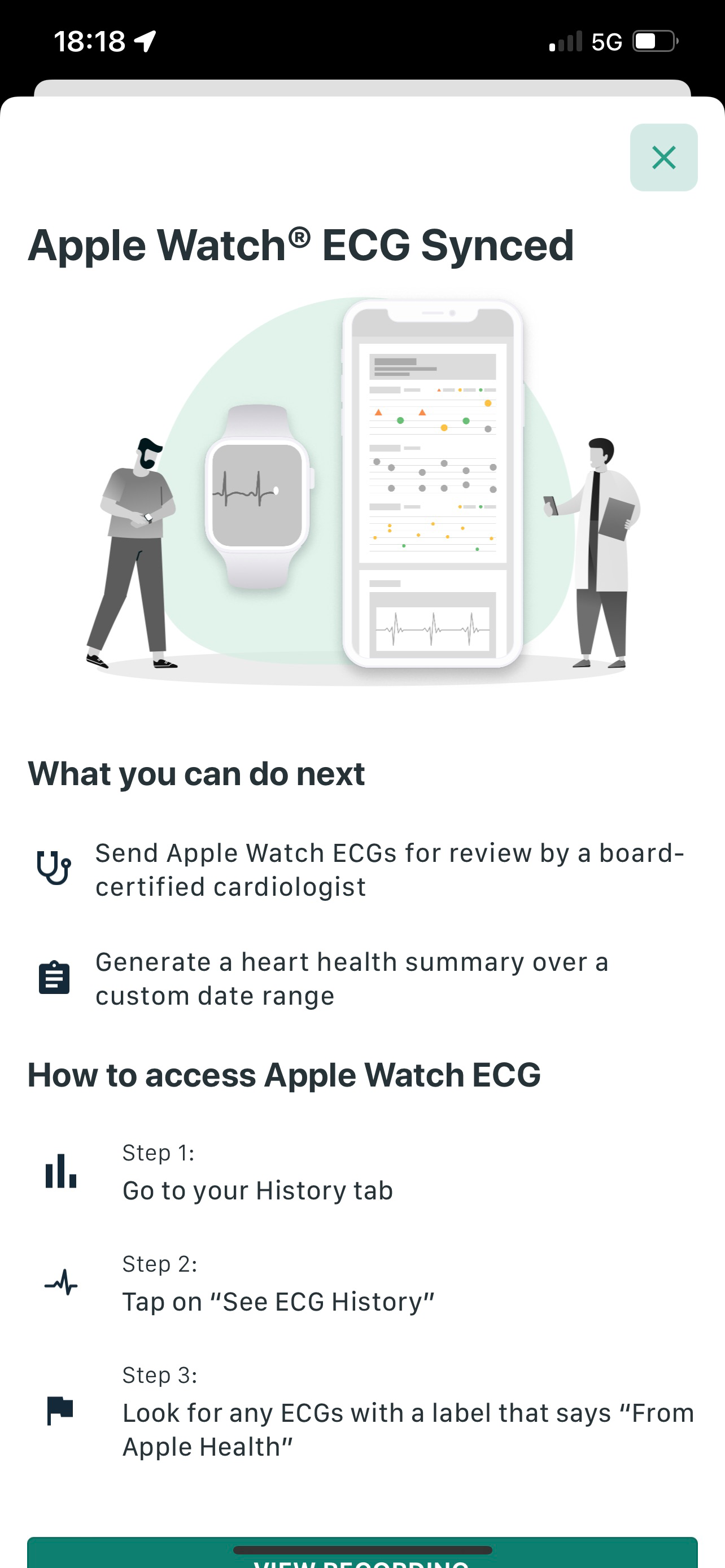


You are also given a summary of the ECG


It's then possible to share the ECG as a PDF and it takes the whole chart like you'd get from a ECG machine in a hospital (but split into pages).

Note the first page often has weirdness at the beginning as you settle down and stabilise the readings.


The next pages tend to be cleaner with just the normal ECG displayed


 The final page is an averaged heart rate


As stated previously it really is imperative to keep as still as possible to get a clean reading. The app will diagnose simple abnormalities such as Atrial Fibrillation, Bradycardia, Tachycardia and a normal heart rhythm. Giving the ECGs to a doctor may help them diagnose arrhythmias and cardiovascular diseases.

The unit is FDA approved as a medical device (which is very different to other wearables that a fitness devices) and acts as though it uses ECG leads I, II, III, aVL, aVR, aVF.

If you're worried at all about heart conditions, this could be for you, it's easy to use and gives good results.

The basic Kardia 6L costs £149 in the UK (direct from the site) and £228 with the addition of a year of KardiaCare which allows advanced determinations (analysis), the results are shared with clinicians and stored in the cloud and you get a heart health summary report. Purchasing separately a plan costs £99 or £179 for 2 years.


2017/08/22

Kardia Band - an ECG monitor for your Apple Watch

The Kardia Band is made by AliveCor and is a watch strap for the Apple Watch (it comes in both 38 and 42mm versions). It replaces the standard Apple Watch strap and there's a big chunk of metal in the bottom strap.

To record your ECG place your thumb on the metal blob and your fore-finger onto the other side of your wrist. Run the Kardio app, sit back and RELAX. It's VERY sensitive to any kind of movement. After 30 seconds it will beep and then press save and it will try and filter out your ECG. If you move or there's lots of electric interference it's unlikely you'll get a good reading. Assuming you're not moving around much and the software processes the data, you'll then get a normal (or not) reading and you can scroll through the waveform, like it's been printed on paper and you move along along it.

AliveCor also make a Bluetooth version where you place your fingers on which is actually considerably cheaper and I'd guess gives better readings, but then you have to remember to take it with you or buy their special iPhone cases which wil hold the device.

The Kardia band does work and it's not reported any abnormal heart readings, which is probably a good thing. It's nice that you can take a reading whenever you like (as long as your wearing your Apple Watch), but it's very sensitive to environmental conditions.

The Kardia Band costs £199 in the UK directly from the AliveCor site (it's not available in the US as it's not FDA approved). The watch strap and metal insert have been improved since earliy version when the metal bit tended to fall out.

The Kardia Mobile Bluetooth sensor is available for £99 from AliveCor and is also available in the US.

2016/11/24

AliveCor Kardia band for Apple Watch

AliveCor make things that can read your ECG (EKG) and they've now released the Kardia band which is an Apple Watch strap.

It's easy to install, just press the release buttons on the underside of the Apple Watch, slide the original straps out and insert the Kardia Band ones (the sensor band goes into the one at the bottom of the Watch).

The watch rebooted after the sensor strap was inserted, but it came back fine.

You need to have the Kardia app installed and register an account, then make sure it's installed on the Apple Watch.

Running the app on the phone doesn't do much (it's designed to work with other AliveCor products). Opening the app on the watch then gives you the option of recording an ECG. It's best to have your hand resting somewhere and not moving much (there are options in the app to select which region you're in and whether you're in a 50Hz or 60Hz mains area).

The sensor strap has two sensors, one underneath the strap and one on top. Say the watch is on your left hand, lay that flat somewhere and place the right hand on to it and your finger on the top sensor. Hit record (well you'd probably do that before, you're given some time before a reading is taken) and a countdown timer starts, stay as still as possible until it finishes. After the reading is taken is does some calculations and you can scroll through your ECG and the watch app tells you if it's normal or not (couldn't test the not normal reading) and you can save the results.

It's possible to allow another user to use the app, but the watch needs to be placed on them.

The band costs £99.00 direct from the AliveCor site in both 388mm and 42mm versions. It's a nice quantified self device to have, but expensive and unless you have a heart problem, don't know if really worth it and have to wait to find out how it affects battery life of the watch.

2012/10/25

Plessey release consumer ECG product

Plessey Semiconductor have released an consumer ECG monitor based on their EPIC chip. Called imPulse, it works by a user just holding the device with their thumbs and then displays the ECG on a smartphone or tablet connected via Bluetooth.

The devices contains two Plessey PS25201 EPIC sensor (one for each thumb) and the software on the smartphone/tablet can perform simple analysis to display the heart rate.

The sensors work by detecting the electrical potential in the air (about 100V per metre of height) and the disruption caused by the human electrical signals.

The sensors can also be used for non-contact heart rate detection, but there is a lot more ambient noise to remove and requires more complex software for analysis.

The EPIC sensors can also be used to detect people through walls using clever software.